READINGS FOR THE SOLEMNITY OF THE MOST HOLY TRINITY, YEAR C, SUNDAY 12TH JUNE, 2022
First Reading: Proverbs 8: 22- 31
Psalm: 8
Second Reading: Romans 5: 1-5
Gospel: John 16: 12-15
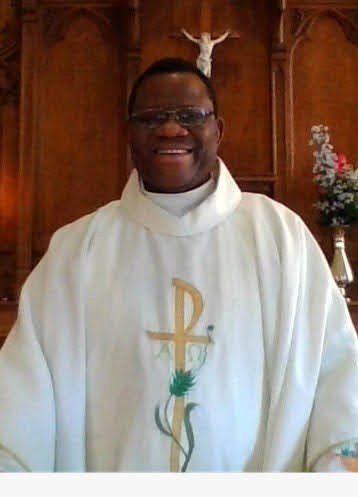
REFLECTION BY FR CORNELIUS NWAOGWUGWU, CM
THE MYSTERY OF THE MOST HOLY TRINITY
Dear Brothers and Sisters in Christ,
A sincere welcome to all of you as we gather to celebrate the Solemnity of the Most Holy Trinity. Today is called Trinity Sunday. On this special day, the Church teaches us that there is a Trinity of Persons in one God. Father, Son and Holy Spirit consist of the three persons in one God. How can we explain this teaching? How can this be possible? How can our intellect comprehend this? The truth is that we do not know everything about the Trinity. Our intellect is limited to comprehend the full realities of the Trinity. This is a mystery of the highest proportion. Trinity is an incomprehensible mystery. Our God is far beyond the grasp of our intellect. There lies the mystery of the Most Holy Trinity.
In my reflection today, I will draw insight from the Bible and the Catechism of the Catholic Church to share with you some of the Church’s teachings and understanding of the mysteries of the Most Holy Trinity. I will also apply the message of today’s celebration to concrete situations in our lives to inspire renewal of our faith, hope, love, peace and unity in our families, our communities and in the world.
It is an established fact that the teaching on the Most Holy Trinity finds its solid basis in the Bible. It is good for me to mention that the Old Testament books give only indirect and passing references to the teaching on the Holy Trinity. In the book of Genesis, Chapter 1 verse 26, the Lord God said, “Let us make man in our image, according to our likeness.” Again, the book of Genesis, Chapter18 verse 2, describes how Yahweh visited Abraham under the appearance of three men. In the book of Genesis, Chapter 11 verse 7, before punishing the proud builders of the Tower of Babel, God says, “Come, let us go down among them and confuse their language.” There was no direct mention of the Holy Trinity in the above quotations, but you can observe an implicit expression of the Trinity.
In the New Testament, we find a direct and explicit mention of the Holy Trinity: the Father, the Son and the Holy Spirit. The Gospel of Luke, describes how God the Father sends the Archangel Gabriel to Mary to announce to her that God the Holy Spirit, will “come upon” her, “the power of the Most High will overshadow” her. The Son will be made flesh in her womb. “Therefore, the Child to be born will be called holy, the Son of God.” (Luke 1: 26-38). During the baptism of Jesus, the Holy Spirit is shown descending on Jesus in the form of a Dove, while the voice of God the Father is heard from the clouds, saying, “This is my Son, the Beloved; my favour rests on him”. (Matthew 3:16-17). In the preaching mission given by the Risen Lord to the disciples, Jesus commands them to baptize people “in the Name of the Father and of the Son and of the Holy Spirit.” (Matthew 28:19). Jesus said, “The Father and I are one” (John 10:30). “I am the Son of God” (John 10: 37) “Believe that the Father is in me, and I in Him.” (John 10: 38). In sending the Holy Spirit on Pentecost, Jesus reassured His disciples that He is with them always to the end of time. (Matthew 28:16-20)
In his letter to the Romans, St. Paul explained to the Romans that the spirit they received is not the spirit of slaves that brings fear into their lives. It is the spirit that makes us cry out, “Abba, Father!”. Paul confirms that the Holy Spirit bears witness that we are children of God. (Roman 8:14-17)
The teaching of the Church in the Most Holy Trinity finds its solid basis in the revelations of Christ. He revealed this to us. One of the most important revelations of Jesus is that God is in Himself a community of Persons that exists in love. That is the inner nature of God. Life of heaven consists of a community of Persons that exists in love.
Jesus has revealed to us three separate functions that are carried out by the Three Persons. He has told us that it is proper to attribute to God the Father the work of Creation, to God the Son the work of Redemption and to God the Holy Spirit the work of Sanctification. Our knowledge of God as Trinity is made possible by God, who has chosen to reveal Himself as Father, Son and Holy Spirit. As Father, God has brought forth the created universe, including our own being. As Son, Jesus has made known a God who cares and loves us so passionately and even to die for us. As Spirit, God remains with us and within us till the end of time.
The Catechism of the Catholic Church teaches that today’s feast invites us to live in the awareness of the presence of the Triune God within us. There is one God, who has three Persons, Father, Son and Holy Spirit. Each Person is God, yet there is still only one God. (Catechism of the Catholic Church, 253)
In fact, faith in the Most Holy Trinity is the bedrock for our Christian religion. It is upon this reality that Christianity is built. We as Catholics are accustomed to begin our prayers: In the name of the Father, and of the Son, and the Holy Spirit. At the end of our prayers we address our petitions to the Father, through his Son, Jesus Christ, in union with the Holy Spirit. When we admit someone into the Christian fold, we baptize the person in the name of the Father and of the Son and of the Holy Spirit. We bless ourselves with the sign of the Cross, invoking the Name of the Father and of the Son and of the Holy Spirit. We conclude our prayers glorifying the Holy Trinity, saying “Glory be to the Father and to the Son and to the Holy Spirit.” These are our expressions of faith in the Most Holy Trinity.
These passages in the Bible imply the teaching of the Church in the Blessed Trinity and today’s liturgical celebration confirms the mystery of the Most Holy Trinity.
As we join the whole Church to celebrate Holy Trinity Sunday today, our attention is drawn to the need for us to live in love, peace and unity. St. Paul reminds us of the Father’s love, the grace that comes through Jesus Christ and the unifying power of the Holy Spirit. We need to be aware of God as the source of our strength and courage. The awareness and conviction of the presence of God within us gives us the strength to face the challenging problems of our lives with faith and courage. St. Paul says: “the love of God has been poured into our hearts by the Holy Spirit which has been given us.” (Romans 5:1-5)
Our attention is also drawn to the need for us to see the Trinity as the model for unity in our families, communities and countries throughout the world. We are created in love to be a community of loving persons, just as the Father, Son, and Holy Spirit are united in Love. From the day of our Baptism, we belong to the Father, Son, and Holy Spirit. How privileged we are to grow up in such a beautiful Family of God! Hence, let us turn to the Father, Son, and Holy Spirit in prayer every day. We belong to the Family of the Trinity. The love, unity, peace and joy in the relationship among the Father, Son, and Holy Spirit should be the supreme model of our relationships. Our families become truly Christian when we live in a relationship of love and harmony with God and with each other.
Like God the Son, we are called upon to reconcile, to be peacemakers, to put back together that which has been broken because of our inordinate ambitions and selfishness. It is our responsibility to uphold the truth, dispel ignorance and enthrone love, joy, respect, justice and peace in our families and in the world.
In conclusion, let us join St. Francis Xavier in his favourite prayer to say: “Most Holy Trinity, who lives in me, I praise you, I worship you, I adore you, and I love you” now and forever. Amen.
Fr. Cornelius Nwaogwugwu, CM.